The History & Logic Behind Naming 24 Ttirthankaras
25 Jul
A child is born without a name. A few days after its birth, it is given a name. The purpose is to give identity and recognition. In some instances, there will be an incident or memory associated with the name that is chosen for the child. In some other instances it could be the physical appearance, colour, dreams etc that resolves the name. In the avaspirni age of the Jain religion there have been Lord Rishab and twenty four others lords who were born. The following is an account of the reasons or incidents related to the naming of these 24 lords of the Jain religion.
01. Lord Rishab Prabhu
Before the birth of Lord Rishab his mother Marudeva had first had a dream of ‘Vrishab’. On both the thighs of Lord Rishab in this the words ‘Vrishab’ were imprinted. Hence he came to be known as Rishab. Rishab and Vrishabmean the same.
02. Lord Ajit Prabhu
The parents of Lord Ajit would always involve themselves in games and sports. Each time they did so, the father invariably won the game against his mother. But after the conception of lord Ajit his mother would always win the games. Thus she named his ‘Ajit’ or the unconquered one.
03. Lord Sambhav Prabhu
When the Lord Sambhav was conceived the production of grains increased and there was much prosperity. Hence he was called Sambhav or possible.
04. Lord Abhinandan Prabhu
After the conception of Lord Abhinandan, the Lord Indira would often come and greet the unborn child. So the child came to be known as Abhinandan.
05. Lord Sumati Prabhu
From the time the child was conceived by its mother she had a strange and astonishing enlightenment of wisdom and knowledge. She then decided to call the child Sumati or the one with good wisdom.
06. Lord Padma Prabhu
When the Lord Padma was concieved by its mother, she had a desired to be reclining on the bed of the Lotus flowers. One of the Gods, fulfilled her desire by creating a recliner made of lotus petals for her. The child that was born also had the rosy complexion of a lotus flower. Hence he was called Padma or the Lotus flower.
07. Lord Supasharv Prabhu
After the conception of the child its mother’s pasharv turned beautiful. So he was called Supasharv.
08. Lord Chandra Prabhu
When the Lord Chandra was conceived, his mother felt a longing for the moon. Her complexion glowed of happiness with radiance and the beauty of the moon. So the child that brought that glow to the mother came to be calledChandra or the Moon.
09. Lord Suvidhi Prabhu
The mother of Lord Suvidhi achieved success and prosperity in every endeavour she undertook, so she called her child Suvidhi.
10. Lord Sheetal Prabhu
The father of Lord Sheetal was troubled with a malignant heat disease. The medications that he was taking did not help him in any way. Since the conception of the child the father was instantly relieved of his heat disease and hence they called the child Sheetal or the cool one.
11. Lord Shreyans Prabhu
The father of Lord Shreyans had a bed, which was the family heirloom that had been bestowed by the gods. But whoever reclined on it would be greatly inconvenienced. When the child was conceived the mother of the child had a great desire to recline on this bed and she did so. But the gods did her no harm as they realized she was bearing the Lord. The mother was saved due to her being in family state. So she called her son Shreyans.
12. Lord Vasupujya Prabhu
When the Lord Vasupujya was conceived the god Indira started venerating the mother of the unborn child. Also theVaishram Gods started showering the kingdom with diamonds and precious stones, so he came to be calledVasupujya.
13. Lord Vimal Prabhu
When the Lord Vimal was conceived, the mind and the body of the mother were calmed and relaxed. She called her son Vimal or the relaxed one.
14. Lord Anant Prabhu
When the Lord Anant was conceived, one day in her dream his mother saw an endless chain of diamonds linked together. She called her son Anant or the endless one.
15. Lord Dharma Prabhu
When the Lord Dharma was conceived the mother became very religious and devout and she resolved to call her son Dharma.
16. Lord Shanti Prabhu
When the Lord Shanti was conceived there was an uprising that had been peacefully settled hence he came to be called Shanti or peace.
17. Lord Kunthu Prabhu
The mother of Lord Kunthu, one day saw a dream in which on a beautiful and fertile wide expanse of land there was a huge dome of diamonds and she thus awakened from her sleep. So she called her son Kunthu.
18.Lord ArPrabhu Prabhu
When the Lord Ar was conceived his mother in her dream saw a beautiful and huge chakra and so called her son ar.
19. Lord Malli Prabhu
When the Lord Malli was conceived his mother had a strong inclination to sleep on a bed bedecked with the fragrant flowers of all seasons. Hence she called her child Malli.
20. Lord Munisuvrat Prabhu
When the child Lord Munisuvrat was conceived his mother was bound by a vow so the child came to be known asSuvrat.
21. Lord Nami Prabhu
When the child was conceived the kingdom of Lord Nami was invaded by the enemy. His mother felt a desire to go on to the roof of the house and look down upon the enemy and due to this with the effect of the child in the womb, the enemy was defeated. The child was hence called Nami.
22. Lord Arishtanemi Prabhu
When the child was conceived the mother in her dream saw a huge diamond studded wheel spinning. They decided to call the child Arishtanemi.
23. Lord Pashwarya Prabhu
When the child had been conceived in the womb of the mother of Lord Pashwarya, one day while his parents were asleep in pitch darkness, the mother felt that there was a seven headed snake passing by the bedside where they were asleep. Drawing her husbands arm away from where the snake was passing she saved his life. She said she could see it even in the pitch darkness. Hence they called their child Pashwarya.
24. Lord Vardhamana Prabhu
There was prosperity like never before after the conception of Lord Vardhamana in the kingdom and the love among the family members increased. Hence he was called Vardhaman or ever prospering.

Live & Let Live
Monday, July 25, 2011


Sunday, July 24, 2011
Friday, July 1, 2011
Who is Tirthankara ?
In Jainism, a Tirthankar : “Fordmaker or Propagator“; also Tirthankara or Jina) is a human being who achieves enlightenment (perfect knowledge) through asceticism and who then becomes a role-model teacher for those seeking spiritual guidance.
A Tirthankar is a special sort arihant, who establishes the fourfold religious order consisting of monks, nuns, laymen and laywomen after achieving omniscience. After achieving enlightenment, a Tirthankar shows others the path to enlightenment. At the end of his human life- span, a Tirthankar achieves liberation (‘moksh’ or nirvan’), ending the cycle of infinite births and deaths. Jains believe that exactly twenty four Tirthankars are born in each half cycle of time in this part of the universe.
As Tirthankars direct us to enlightenment, their statues are worshipped in Jain temples by Jains aspiring to achieve enlightenment. Tirthankars are not God or gods. Jainism does not believe in the existence of God in the sense of a creator, but in godss as beings, superior to humans but, nevertheless, not fully enlightened. Twenty-one of the Tirthakaras are said to have attained Moksha in the Kayotsarga (standing mediation) posture; Rishabha, Nemi; and Mahavira on the padmasana (lotus throne poisture).
The 24 Tirthankaraswho achieved liberation (‘moksha’ or nirvana’), ending the cycle of infinite births and deaths, are considered to be the creator of Jain religion. They are divine elements of Jainism. They have attained all the achievement of ultimate nature including the ultimate knowledge after making vigirous efforts.
Tuesday, June 28, 2011
18 Sources of Sin : Jainism
We are always busy doing something good that may be helping others or being bad and causing trouble to others. When we help someone, not only does it bring comfort to that someone, but it also brings us comfort by punya. But when we cause trouble for others, it causes us to suffer too due to pap (sins). The kinds of activities that cause others to suffer are called sinful activities and they can range in various levels from a simple tale-telling to the killing. In Jainism such activities are divided into 18 categories and they are considered the sources of the sins that lead to bad karmas or pap. These pap cause trouble in our current lives as well as future lives, too. Therefore, we should be careful not to carry out any of thefollowing 18 sinful activities, which are interconnected with one another.
- Pranatipata (Violence)
- Mrushavada (Untruth)
- Adattadan (Theft)
- Maithun (Unchaste)
- Parigraha (Possessiveness)
- Krodh (Anger)
- Mana (Arrogance)
- Maya (Deceit)
- Lobh (Greed)
- Rag (Attachment)
- Dwesh (Hatred)
- Kalah (Quarreling)
- Abhyakhyan (Accusation)
- Paishunya (Gossip)
- Parparivada (Criticism)
- Rati-Arati (Liking and Disliking)
- Maya-mrushavada (Malice)
- Mithya-darshan-shalya (Wrong beliefs)
Wednesday, June 8, 2011
The 12 Chakravartis
Who are Chakravartis ?
Chakravartis are emperors who rule over a part of the world (Bharata- and having six parts). Their life is embellished with similar features like those of the Tirthankaras. Every ChakarvartI obtains his high rank on account of good actions done in earlier existences and on account of a Nidana, i.e. a wish which is passionately cherished in an earlier life. He is born in the royal family of Iksvaku, grows in pomp and glory and is experienced in all arts and sciences. Having beauty and power, being brave and clever, he is embellished with 36 insignias of mind and body. After vanquishing all the opponents in battle, he conquers the world; served and praised by gods and genii, he is anointed emperor.
He rules for a long period and powerfully, enjoying all the pleasures with his many wives and treasures which the earth can offer. The end of the life of Chakravartls is very different. Whereas some renounce the world or even become Tirthankaras (like the 16th, 17th and 18th Chakravartis of this world-period) and get redemption, others come to the heaven of gods after their death, and some others fall into hell on account of their bad actions.
Chakravartis owe their success not only to their capability and power and the support they get from their supermundane beings, but also, above all, to the wonderful “gems” (Ratnas) and precious “treasures” (Nidhi) which are in their possession.
The 12 Chakravartis
Chakravartis are emperors who rule over a part of the world (Bharata- and having six parts). Their life is embellished with similar features like those of the Tirthankaras.
According to Jain mythology, there were 12 Chakravartis, as following:
1. Bharat
2. Sagar
2. Sagar
3. Maghava
4. Sanatkumar
5. Shanti
6. Kunthu
7. Arah
8. Subhoum
9. Padm
10. Harishen
11. Jaysen
12. Bramhdatt
The nine “treasures” with which a Chakravarti is blessed
Chakravartis are emperors who rule over a part of the world (Bharata- and having six parts). Their life is embellished with similar features like those of the Tirthankaras.
The nine “treasures” (Nidhis) with which a Chakravarti is blessed, are, according to one view, collection of books in which there is literature on 9 different branches of science, according to another, contair!ers or treasure-houses in which there are things whose application is taught in those books. Names and contents of the 9 Nidhis are:
1. Naisarpa: houses,
2. Panduka: ricc and corns,
3. Pingalaka: ornament,
4. Sarvaratna.ka; 14 gems,
5. Mahapadma: clothing,
6. Kala: determinatjon of time for astrological predictions,
7. Mahakala: mines of metals and precious stones,
8. Manavaka: weapons warcraft,
9. Sankha: poetry, dramaturgy, music.
Wednesday, June 1, 2011
8 Auspicious Jain Symbols (Ashtamangal)

 |
| 8 Auspicious Jain Symbols (Ashtamangal) |
These are eight symbols Swastika, Shrivasta (an auspicious sign on the chest), Nandhyavarta (complex swastika), Vardhamanaka, Bhadrasana (a holy seat), Kalasha (Holy pitcher), Minyugala (Fish-couple) and Darpana (Mirror), That have been auspicious since time immemorial and have been depicted in the Kalpasutra. According to the scriptures every Jain has to draw them with pure un-broken rice-grains before the icon of the Tirthankar. Some have reduced this custom to the drawing of a swastika, along with three heaps of rice-grain symbolising knowledge, vision and character.
-
Swastika: symbolizes four destinies; a) human beings, b) heavenly beings, c) hellsih beings and d) tiryanchs (rest of the living beings). The root of Swastika is SU+US; SU means benefic and US means existence; so it also represents glory, prosperity, progress and success.
-
Shrivatsa: ’Vatsa’ means chest and ‘Shri’ means beauty. The middle of the chest is raised a little with a bunch of soft hair. This is called Shrivatsa. Shrivatsa means a beautiful mark on manifested itself from the heart of the Jina.
-
Nandyavart: big swastika with nine corners. In mythology nine points in nandhyavarta indicate nine types of material, mental, physical and spiritual wealth and treasure.
-
Vardhamanak: also known as sharav, which means a shallow earthen dish used for lamps. When one shallow dish is covered by another one upside down, it appears like a box. This symbol is suggestive of increase of wealth, fame and merit due to the grace of the Lord Jina.
-
Bhadrasana: (Sinhasana) meaning throne. It is auspicious because it is sanctified by the feet of the blessed Lord Jina.
-
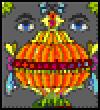
Kalash: Symbol of auspiciousness. It is a holy pitcher or a jug made of copper, silver or steel. It is used for religious and social ceremonies. It is used in temples when certain images are being worshipped. When one enters a new home it is customary to carry the kalasha on the head reciting mantras. The kalasha is filled with pure water, which signifies wisdom and fullness. This ceremony is performed to welcome grace and happiness into the new home.
-
Minyugal: A pair of fish. It is a symbol of Cupid’s banners coming to worship the Jina after the defeat of the God of Love.
-
Darpan: Meaning a mirror. The mirror reflects one’s true self because of its clarity.




Tuesday, May 24, 2011
Gori jo Mandar – Gori Temple Tharparkar Sindh
300 years old ‘Gori jo Mandar’ or Temple of Gori is Situated between Islamkot and Nangarparkar, Gori jo Mandar is shrouded in mystery. Even its original name is lost in antiquity, having changed many times in the course of the centuries.

With no written history of the temple having survived, the only story as to its origin is a legend that it was built by Goricho, a Jain worshiper, in 300 AD. At the center of Nangarparkar city stands another Jain temple. Near the temple ‘Gori Jo Mandar’ Kasbo village is also a picnic site. Here, peacocks and peahens make the atmosphere pleasant.


Subscribe to:
Posts (Atom)